
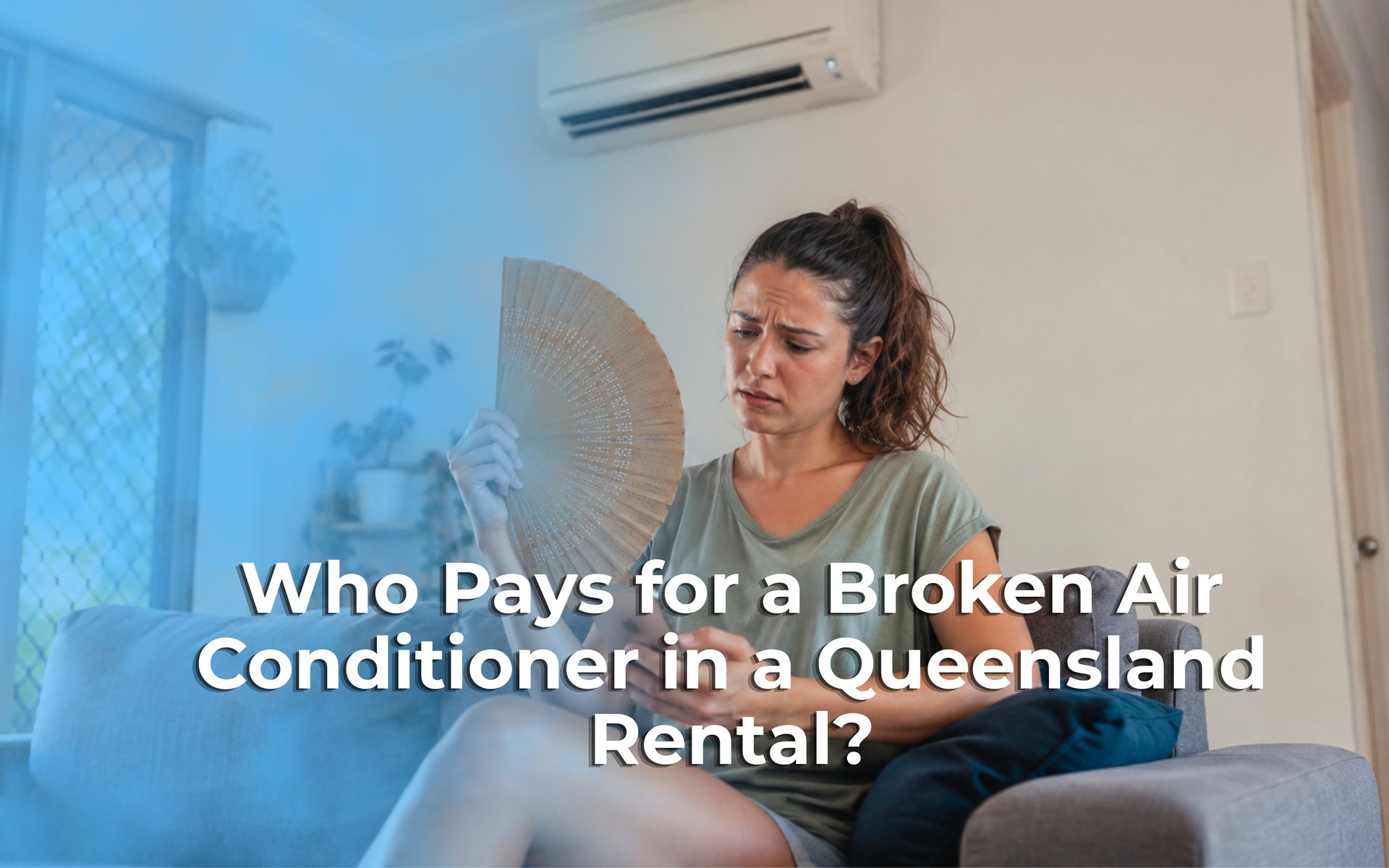
When an air conditioner stops working in a Queensland rental, it can quickly turn from a small inconvenience into a serious comfort issue.
Queensland weather can be unforgiving. One day the home feels fine, then suddenly the summer heat, humidity, and hot humid air make it difficult to sleep, work, or relax in your living areas.
So the big question is:
Who pays when the air conditioner breaks — the tenant or the landlord?
The answer depends on a few things:
- Was the system included with the property?
- Did it break through normal use?
- Was the damage caused by misuse or neglect?
- What does the rental agreement say?
- Is it a fixed system, portable unit, or temporary setup?
This guide explains the usual responsibilities in Queensland, what tenants and owners should do, and when temporary cooling may be a practical option while repairs are being arranged.
Important note:
This article is general information only and is not legal advice. For specific rental disputes, always check with the Residential Tenancies Authority, QCAT, or a qualified professional.
Quick Answer: Who Usually Pays?
In most Queensland rental situations, the landlord is usually responsible for repairing an air conditioner that was supplied with the property and has failed due to:
- Normal use
- Age of the unit
- Mechanical failure
- Electrical faults
- Fair wear and tear
- General breakdown
The tenant may be responsible if the damage was caused by:
- Misuse
- Neglect
- Tampering
- Accidental damage
- Damage caused by guests
- Failure to follow reasonable care instructions
A simple way to look at it:
If the system broke through normal use, the owner usually pays.
If the renter caused the damage, they may have to pay.
Why the Property Owner Usually Pays
If the air conditioner was already installed when the renter moved in, it is usually treated as part of the property.
This may include:
- A wall-mounted split system
- A ducted system
- A fixed window unit
- Other supplied air conditioning units
Because these systems belong to the property owner, they generally need to be kept in good working condition.
The owner would usually be responsible if:
- The unit stops blowing cold air
- The compressor fails
- The fan motor stops working
- The system leaks due to a fault
- There is an electrical issue
- The system is old and reaches the end of its life
- The issue existed before the renter moved in
- The fault is caused by fair wear and tear
For example, if a supplied system stops working after years of normal use, the repair is usually the owner’s responsibility. The renter did not cause the fault simply by using the system as intended.
When the Renter May Have to Pay
The renter is expected to take reasonable care of the property and anything included with it.
They may have to pay if the aircon is damaged because of:
- Physical damage
- Careless use
- Tampering with the unit
- Removing covers or internal parts
- Ignoring leaks or faults
- Blocking vents for a long period
- Not cleaning accessible filters if required
- Damage caused by visitors
However, there should always be evidence.
This may include:
- Photos or videos
- Entry and exit condition reports
- Repair invoices
- Written communication
- A technician’s report
Key point:
If the system failed because of age or normal use, the property owner usually pays.
If the damage was caused by misuse or neglect, the renter may be asked to pay.Repair vs Maintenance: What Is the Difference?
One of the most common causes of confusion is the difference between repair and maintenance.
Repairs
A repair means fixing something that is broken or no longer working properly.
This may include:
- Replacing a failed motor
- Fixing an electrical fault
- Repairing a refrigerant leak
- Replacing a compressor
- Repairing drainage problems
- Replacing the system if repair is no longer practical
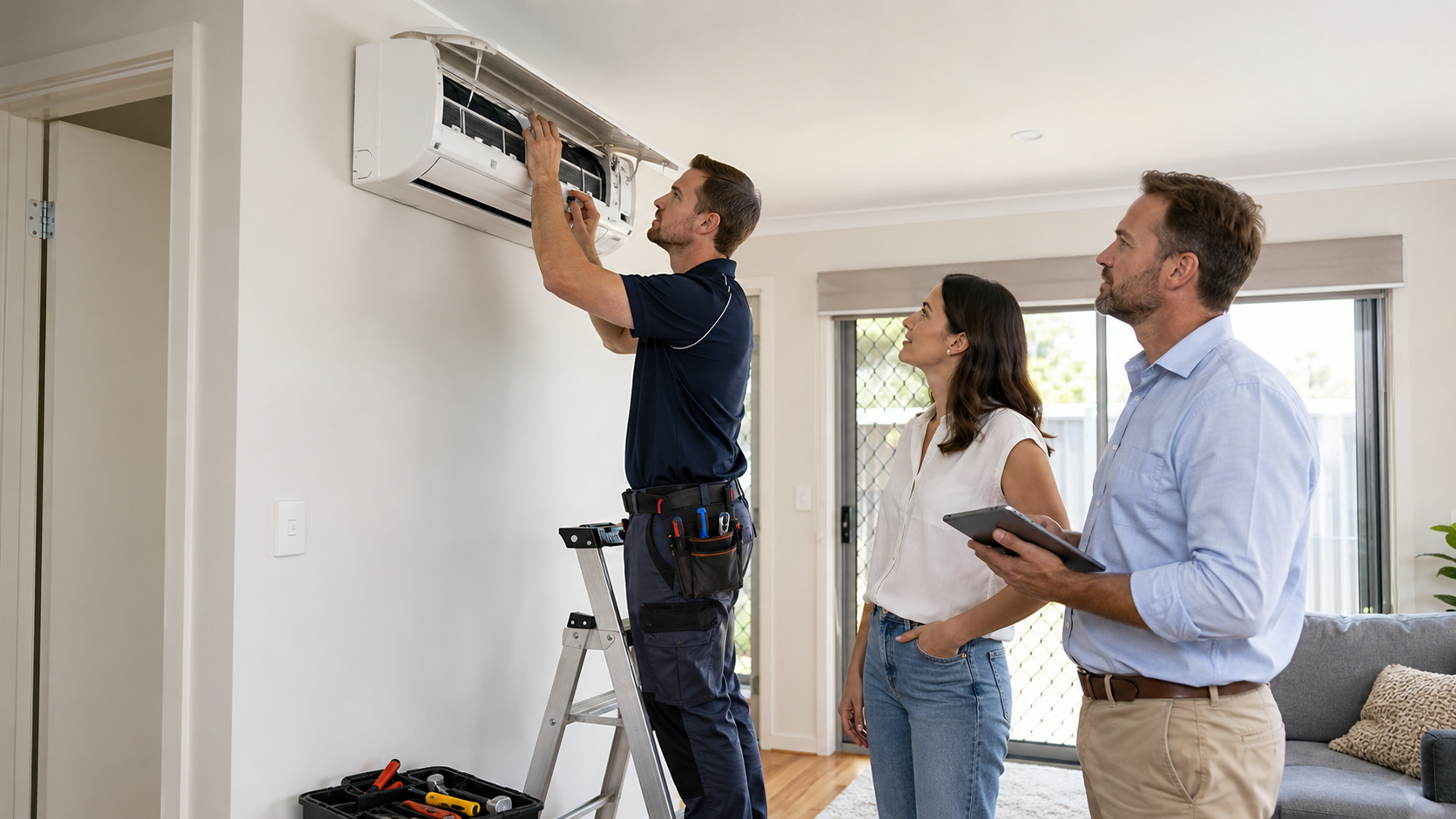
Professional air conditioning repairs for supplied systems are usually the owner’s responsibility unless the renter caused the damage.
Maintenance
Maintenance is routine care that helps the system work properly.
This may include:
- Cleaning accessible filters
- Keeping vents clear
- Making sure furniture does not block airflow
- Using the correct settings
- Reporting problems early
- Checking remote batteries
Good ventilation also matters. When airflow is blocked, the system works harder, may consume less power when maintained properly, and can lose energy efficiency if neglected.
Simple Responsibility Guide
| Issue | Usually Paid By |
|---|---|
| Compressor failure | Property owner |
| Electrical fault | Property owner |
| Old unit stops working | Property owner |
| Normal wear and tear | Property owner |
| Professional servicing | Usually property owner |
| Remote batteries | Usually renter |
| Cleaning accessible filters | Usually renter |
| Damage caused by renter or guest | Renter |
| Damage caused by tampering | Renter |
What About Portable Air Conditioners?
Responsibility for a portable air conditioner depends on who owns it.
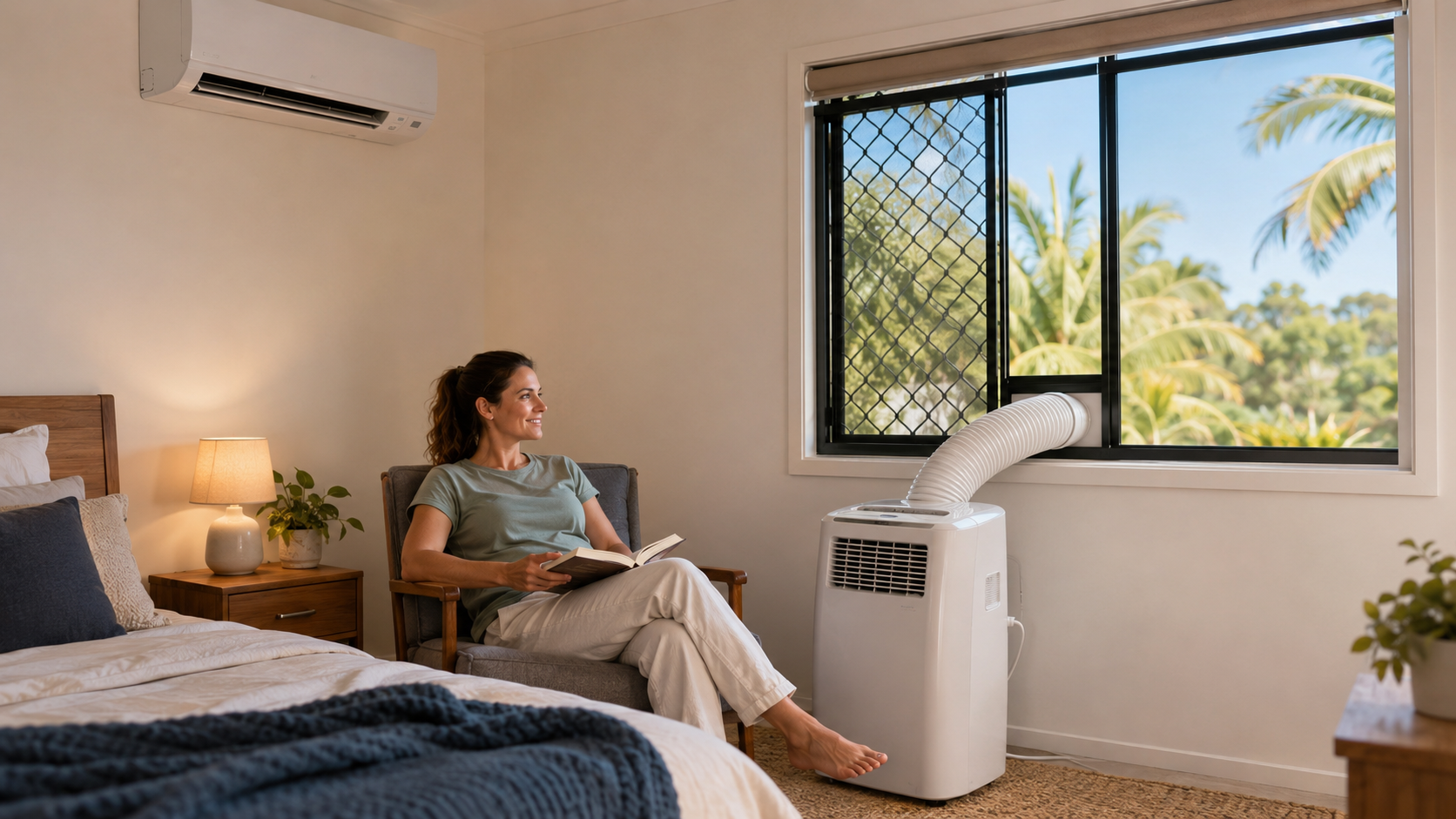
If the renter bought their own unit, they usually maintain or replace it themselves. If the property owner supplied the unit as part of the tenancy, it may be treated as an included item.
The same applies to a portable aircon. If it belongs to the owner and fails through normal use, the owner may need to repair or replace it. If it belongs to the renter, the renter is usually responsible.
A reverse cycle portable air conditioner may also provide both cooling and heating, acting like a small heater during cooler months. This can be useful in a single room, especially when the main system is not available.
Temporary Cooling Options While Waiting for Repairs
Sometimes repairs take time. Parts may need to be ordered, technicians may be booked out, or the system may need full replacement.
In those cases, temporary cooling can help keep the home comfortable while the main system is being fixed.
Some renters, owners, or property managers may consider:
- portable aircon hire
- portable air conditioner rental
- aircon rentals
- air rentals
- air conditioning hire
- portable air conditioning
- air conditioners for hire
- temporary air conditioning
A short-term air conditioning solution can help provide cool air when the main unit is unavailable. This may be useful if you need short-term relief during repairs or need temporary cooling during extreme weather.
For smaller areas, portable cooling can help cool the room without needing to replace the whole system straight away. Some units are easy to move, making them practical for bedrooms, home offices, or living spaces.
In some cases, renters may ask whether they can hire air conditioner equipment temporarily and whether the cost should be discussed with the property manager before arranging anything.
Important:
Do not arrange paid temporary equipment and expect automatic reimbursement unless this has been agreed in writing or follows the correct emergency repair process.
Temporary Cooling for Commercial and Industrial Spaces
The same idea can apply beyond homes.
Temporary cooling may also be useful for:
- A warehouse
- A factory
- office spaces
- construction sites
- server rooms
- data centres
- A public gathering
- commercial and industrial properties
For businesses, temporary systems can help maintain operations during breakdowns, upgrades, or heatwaves.
Depending on the site, options may include:
- commercial air systems
- aircon units
- industrial fans
- cooling equipment
- evaporative coolers
- air scrubbers
- portable systems with an exhaust
- units measured by kw capacity
These cooling solutions can be a cost-effective way to manage comfort without major upfront costs, especially when permanent HVAC repairs or replacements are still being assessed.
For example, a warehouse may need large-scale airflow, while server rooms or data centres may need closer temperature control to protect equipment.
A trusted supplier can help recommend the right rental equipment based on the site’s cooling needs.
Is a Broken Air Conditioner an Emergency Repair in Queensland?
A broken supplied system is not always automatically an emergency repair. However, it may become urgent depending on the situation.
It may be more serious if:
- The home becomes extremely hot
- The renter has a health condition affected by heat
- There are babies, elderly residents, or vulnerable people in the home
- The unit is leaking water
- There is an electrical risk
- There is a risk of mould or property damage
- There is no other way to keep cool
If the issue is minor, the weather is mild, or the system still works partly, it may be handled as a routine repair.
However, in Queensland conditions, a complete AC failure should still be reported quickly.
What Renters Should Do When the System Breaks
If the system stops working, follow a clear process.
1. Check the basics
Before reporting the issue, check:
- Is the power on?
- Are the remote batteries working?
- Has the circuit breaker tripped?
- Is the unit set to cool?
- Is the temperature low enough?
- Is the filter blocked?
- Are the vents clear?
These checks can help avoid delays.
2. Take photos or videos
Record the issue clearly.
Useful examples include:
- Flashing lights
- Water leaks
- Strange noises
- Weak airflow
- The unit turning on but not blowing cold air
- The system switching off by itself
3. Report the issue in writing
Send an email or maintenance request.
Include:
- Your name
- Property address
- Date the issue started
- Description of the problem
- Photos or videos
- Whether the issue affects safety, comfort, or liveability
Sample repair request
Hi [Property Manager],
I’m writing to report that the air conditioner at [property address] is no longer working properly. The unit turns on but does not cool the room. The issue started on [date].
I have attached photos/videos for reference. Could you please confirm when this can be inspected?
Thank you.
4. Avoid arranging repairs without approval
For most routine repairs, renters should not book their own technician and expect automatic reimbursement.
Always get approval first unless the matter qualifies under the correct emergency repair process.
5. Keep records
Keep copies of:
- Emails
- Text messages
- Photos
- Videos
- Repair requests
- Invoices
- Technician notes
What Property Owners and Managers Should Do
Property owners and managers should respond quickly, especially during hot weather.
A good process includes:
- Acknowledge the repair request
- Ask for photos or videos
- Check the entry condition report
- Review the tenancy agreement
- Arrange a qualified technician
- Provide correct entry notice
- Keep the renter updated
- Keep the report and invoice on file
A technician’s report can help confirm whether the fault was caused by:
- Age
- Fair wear and tear
- Mechanical failure
- Blocked filters
- Poor maintenance
- Misuse
- Tampering
- Physical damage
This helps avoid unfair blame and makes it easier to decide who should pay.
Can the Renter Ask for a Rent Reduction?
Sometimes, yes.
If the property was advertised with working air conditioning and the system is unavailable for a significant period, the renter may ask for a temporary rent reduction.
This may be more reasonable if:
- The unit is completely unusable
- The delay continues for several weeks
- The issue happens during hot weather
- The renter has followed up in writing
- The owner has not taken reasonable steps to repair it
Rent should not simply be withheld. The renter should request a fair adjustment in writing and follow the proper dispute process if needed.
Can the Cost Be Taken from the Bond?
Repair costs should not automatically be taken from the bond.
A bond claim may only be reasonable if there is evidence that the renter caused the damage.
A bond claim may be considered if:
- The unit was physically damaged
- A guest caused damage
- The system was tampered with
- A leak or fault was ignored and caused further damage
- A technician confirms misuse or neglect
A bond claim is usually not appropriate if:
- The system failed because it was old
- The issue was caused by normal wear and tear
- The fault was mechanical
- The problem existed at the start of the tenancy
- The issue was reported properly
Bond deductions should be based on evidence, not assumptions.
Common Queensland Rental Examples
Scenario 1: Old Unit Stops Working
The system is old and no longer blows cold air. The technician confirms mechanical failure.
Usually paid by: Property owner
Scenario 2: Guest Damages the Unit
A visitor pulls on the casing and damages internal parts.
Usually paid by: Renter
Scenario 3: Filters Are Blocked
The filters have not been cleaned and airflow is poor.
Usually paid by: It depends on the agreement and technician’s report.
Scenario 4: Unit Leaks Water
The renter reports water dripping from the indoor unit.
Usually paid by: Property owner, unless misuse or neglect is confirmed.
Scenario 5: Temporary Cooling Is Needed
The main system cannot be repaired immediately during extreme heat.
Possible solution: Discuss approved temporary cooling options with the property manager before hiring anything.
What If You Need Cooling Across Australia?
While this article focuses on Queensland rentals, cooling issues are common across Australia, including QLD, NSW, and other states with hot summers.
Rules can vary depending on location, so always check the relevant tenancy authority in your state before making decisions about repairs, rent adjustments, or temporary systems.
How to Avoid Aircon Disputes
The best way to avoid disputes is to stay organised and communicate clearly.
For renters
- Report issues early
- Put repair requests in writing
- Take photos and videos
- Clean accessible filters if required
- Keep vents clear
- Do not tamper with the system
- Keep records
- Do not stop paying rent without proper advice
For owners and property managers
- Make sure the system works before move-in
- Record the condition in the entry report
- Provide simple care instructions
- Arrange servicing when needed
- Respond quickly to issues
- Use qualified technicians
- Replace old systems when repairs are no longer practical
- Discuss temporary options if repairs are delayed
Final Takeaway
In most Queensland rentals, the owner usually pays when a supplied system breaks down through normal use, age, or fair wear and tear.
The renter may have to pay if the damage was caused by misuse, tampering, neglect, or guest-related damage.
When the cause is unclear, a qualified technician’s report is the best way to determine what happened.
And if repairs take time, temporary options may help people control the temperature and stay comfortable until the main system is fixed.
Need Help with Rental Air Conditioning Repairs?
Wahoo Air Conditioning can help with heating and cooling inspections, servicing, repairs, and replacement advice for Queensland homes and investment properties.
Whether you are a renter, property owner, property manager, or business needing temporary or permanent support, Wahoo can help assess the issue and recommend the right next step.
Contact Wahoo Air Conditioning today to book a professional inspection or repair.

